
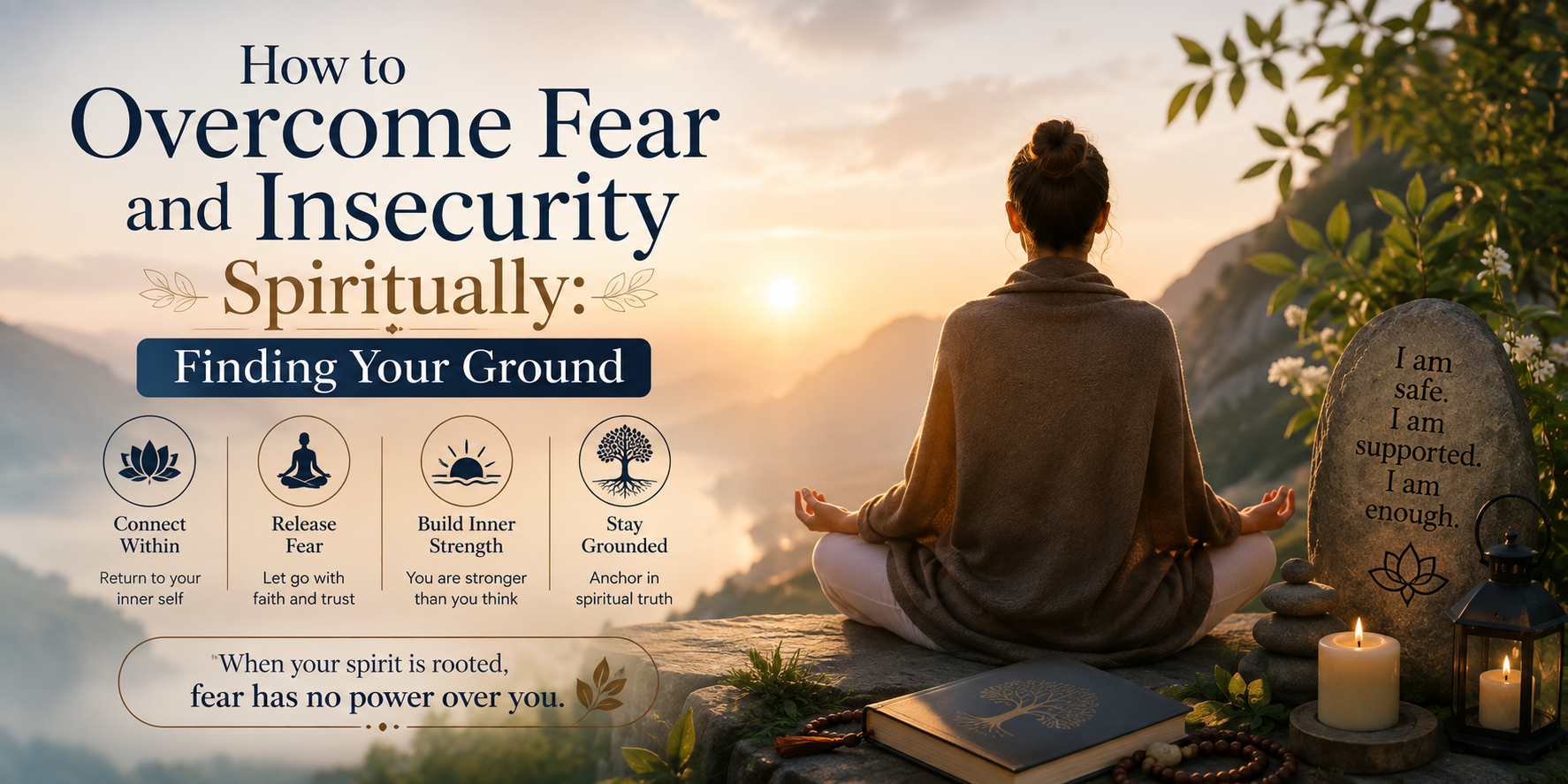
How to Overcome Fear and Insecurity Spiritually: Finding Your Ground
It is near universal that everyone feels fear and insecurity at some point or another, for whatever reason. They can manifest themselves when we are going through a significant decision, a new experience, seeing how we are doing in comparison to others, or simply when we are lying awake with a not so certain tomorrow. Sometimes fear is necessary to save us from true danger, sometimes it is a habit of the mind. But spiritual growth in how to overcome fear and insecurity is not a denial that this kind of emotions exists. It’s about becoming familiar with them, facing them, and building trust in yourself.
Turn Towards Your Fear Instead of Running From It
The first reaction to fear is to flee. We become distracted, overthink, seek reassurance or suppress uncomfortable thoughts. Avoidance is not an effective way to get rid of fear, though.
The spiritual journey starts with awareness. If you feel yourself becoming anxious or insecure stop and take a second. Breathe slowly and notice what is going on, don’t immediately judge it. It is best to just say, “I am feeling afraid right now.
It is just this simple acknowledgment that can set you apart from the feeling. You realize fear is not you – it is what you feel.
Seek strength in something greater!
When we feel we need to control all aspects of our lives, then insecurity can grow. We are concerned about making the right choice, fitting in, or what will happen next.
Spirituality can provide an alternate point of view. Prayer, meditation, spending time in nature or quiet time alone can help us remember that life is bigger than our problems. This feeling of connection can provide comfort when you relate to God, to the universe, to nature and to your own deeper consciousness.
You don’t have to walk around with all your uncertainties. There are times when peace starts with the idea that there are things we cannot control.
Use a different voice and tone in the head instead of Self-Criticism
An insecure voice is a critical inner voice. It’s a message that tells us that we are not good enough, smart enough, pretty enough, or enough. Hearing that voice over and over time can begin to erode our trust.
Spiritual development inspires another response: compassion.
Don’t berate yourself for failing or being unsure, speak to yourself in a calm and patient manner. Remember that you are learning, growing and doing your best and using the knowledge you have at present. Self-compassion does not involve neglecting your weaknesses. It means being aware of them, but not identifying with them.
Embrace uncertainty and the unknown.Learn to deal with uncertainty, the unknown.
Many people have fear because they’re looking for something that life doesn’t guarantee—they’re looking for something that’s not guaranteed to happen. We want to know that everything will be okay, that our decisions will be correct and that nothing will go wrong.
In most cases, there is no certainty.
Spiritual surrender is learning to do the best you can without getting caught up in the results. Act according to what you can, make carefully considered decisions and let life take its inevitable course. Simply reminding yourself ‘I will deal with what happens’ can feel more solid than looking for assurances all the time.
Establish Little Spiritual Practices
Change comes about gradually by simple practice repeated over and over again. You may start your day by meditating or pray for 5 minutes. Maintain a diary and record any recurring fears in an honest manner. Try to be grateful and focus on what you already have, rather than what you don’t.
Social activity with positive contacts or a religious organization is also helpful. One of the most effective ways to increase fear seems to be to keep it by itself; one of the most effective ways to decrease fear seems to be to remind yourself that you are not alone.
Wait for Growth to be Patience – A Slow-burn Approach
You may feel confident and at peace on some days and not on others—you’ll get to experience both. It does not mean that your spiritual growth is gone.
Learning to how to overcome fear and insecurity spiritually is not about no longer fearing and being secure, but rather it is about growing in security. When we are aware, compassionate, and trustful, and do our spiritual practice with consistency, fear is not in control of us anymore.
There is still uncertainty, but it is possible to deal with it calmly. Sometimes, the strength to do what’s next is just having faith in yourself, awareness and courage.