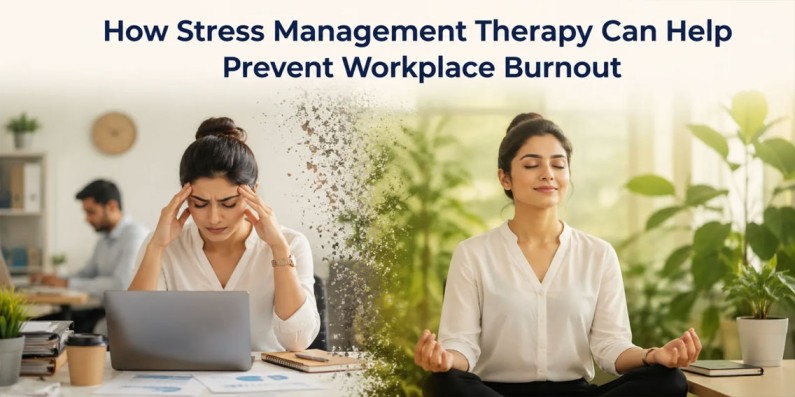
How Stress Management Therapy Can Help Prevent Workplace Burnout
In today’s fast-paced business environment, flexibility with priorities, decision-making and constant attention is vital. Stress can be a daily occurrence that affects mental and emotional health. If stress levels are not managed, it can cause burnout in the workplace, negatively impacting productivity, relationships and quality of life. That’s why stress management therapy is gaining in importance for the maintenance of long-term wellbeing.
Recognizing the Early Signs of Burnout
Burnout can creep up on us and may start with some very easy-to-ignore symptoms. Some early warning signs include not being able to focus, constantly feeling tired, getting irritated or losing enthusiasm about work. Many professionals still endure such emotions as if they are somehow a natural consequence of being a very successful work. Many professionals still suffer from these emotions as if they are a natural consequence of being a very successful work.
But, if these are ignored, it can make recovery more difficult. Stress management therapy can assist people to resolve stress before it gets in the way of their life.
Understanding the Root Cause of Stress
Each person has their own way of dealing with stress in the workplace. Unrealistic deadlines, lack of balance between work and personal life, constant access to digital technology and disagreements with colleagues are some of the most common things for others.
Stress management therapy does not provide a quick fix; it is designed to uncover stressors. Knowing the thoughts, feelings and behaviours that trigger reactivity can help people better manage difficult situations without becoming overwhelmed.
Developing Healthier Coping Mechanisms
The beauty of stress management therapy is that you learn a series of useful practices that promote emotional balance and resiliency. Therapy’ primary emphasis is on providing coping mechanisms which is sustainable instead of the unhealthy ones that leave you overworked, emotional withdrawal, or neglecting self-care.
These may include:
- Setting realistic boundaries
- Improving management and prioritizing schedule
- Mindfulness and relaxation exercises.
- Improving communication and conflict-resolution skills.
- Bringing about a healthy routine that keeps mental health in good shape.
These practices are known to be highly effective in alleviating the effects of stress pertaining to daily workload, stress at work. It also enhances emotional balance over time.
The Role of Reiki and Sound Healing
Besides traditional methods, Reiki and sound healing therapy too has benefitted a lot of individuals in regards to relaxing and balancing their emotions.
Reiki is a gentle and soothing technique through which relaxation to decrease stress is promoted. There are many people who say they feel more at ease and acquire mental clarity after Reiki sessions, which makes them better equipped to deal with work related stress.
Likewise, the art of sound healing employs gentle vibrations from instruments like singing bowls, tuning forks or gongs to create a relaxing atmosphere. Although more research is needed, many people experience sound healing to help calm a frenzied mind, reduce emotional stress and create a feeling of peace and tranquility within.
These therapies should be considered complementary to evidence-based mental health care and not a substitute for it. They can be used in conjunction with stress management therapy to help promote relaxation and overall well-being.
Building Long-Term Emotional Resilience
Burnout is not about being stress-free but knowing how to handle stress in a better way. Stress management therapy teaches people to be able to recognize the signs of emotional stress and learn how to control their stress levels while fostering better relationships at work.
Such coping strategies coupled with stress management therapy techniques such as Reiki and sound healing can be a much organized approach in nurturing people’s psychological and emotional well-being. Using stress management therapy now will allow you to prevent burnout later, which will enable you to have a more balanced, productive, and enjoyable life both personally and professionally.
